
Systems, Safety, and Organisational Resilience
Occupational violence and aggression risks are shaped by more than frontline interactions.
Organisational systems, operational pressures, leadership decisions, workforce capability, and psychosocial hazards all influence how violence and aggression risks emerge and are managed.
PACER at the organisational level helps agencies build safer systems of work while strengthening operational resilience and workforce safety.
A Prevention-Led Organisational Approach
Many workplace violence prevention programs focus primarily on incident response.
The PACER Framework focuses on preventing risks before incidents occur by strengthening:
- Organisational systems
- Workforce readiness
- Governance processes
- Operational planning
- Leadership capability
- Organisational learning
This helps organisations move beyond reactive responses and develop sustainable OVA risk management capability.
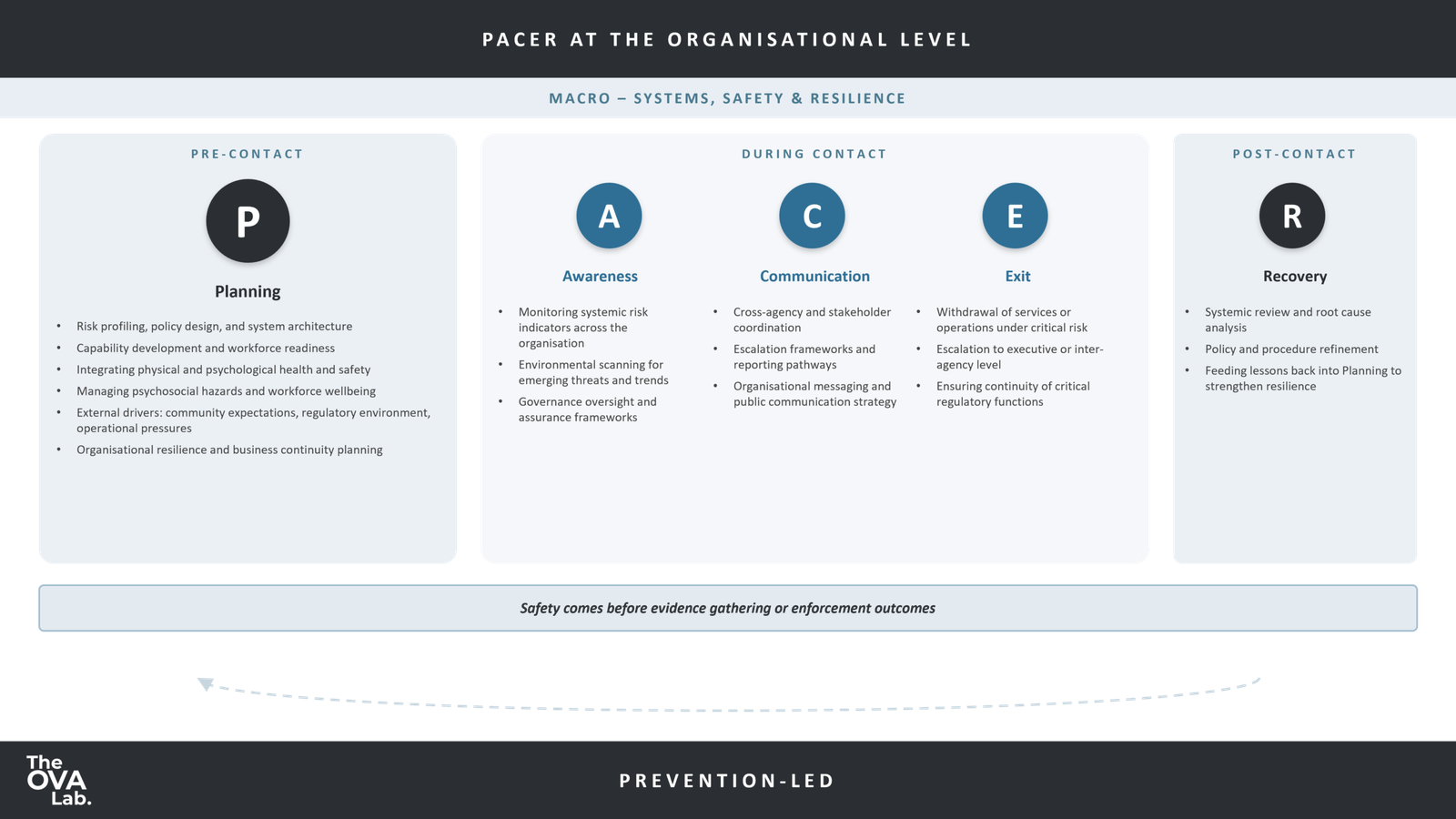
Planning
Building Safer Systems Before Contact Occurs
At the organisational level, planning focuses on creating the conditions for safe operations.
This may include:
- Risk profiling and risk management systems
- Workforce capability development
- Policy and procedure design
- Safe systems of work
- Psychosocial hazard management
- Business continuity planning
- Organisational resilience strategies
Planning also considers external influences such as:
- Community expectations
- Regulatory pressures
- Political and social environments
- Emerging operational risks
Awareness
Monitoring Organisational Risk and Emerging Threats
Organisational awareness involves maintaining visibility over changing operational risks and workforce pressures.
This may include:
- Monitoring systemic risk indicators
- Identifying emerging threats and trends
- Governance oversight
- Workforce wellbeing indicators
- Organisational assurance processes
Strong awareness helps organisations respond proactively before risks escalate.
Communication
Coordination Across Systems and Stakeholders
At the organisational level, communication supports coordination, escalation management, and operational consistency.
This includes:
- Cross-agency coordination
- Escalation frameworks
- Reporting pathways
- Leadership communication
- Public communication strategies
Clear communication supports both operational safety and organisational continuity during high-pressure situations.
Exit
Managing Critical Risk and Operational Continuity
Sometimes organisational risk exceeds safe operating thresholds.
The PACER Framework recognises the importance of structured escalation and safe operational withdrawal when necessary.
This may involve:
- Escalating risks to executive level
- Modifying service delivery approaches
- Activating contingency arrangements
- Protecting staff safety during critical incidents
The framework prioritises safety ahead of enforcement or operational outcomes.
Recovery
Organisational Learning and Continuous Improvement
Recovery is not only about returning to normal operations.
It is also about learning and strengthening future resilience.
Recovery activities may include:
- Root cause analysis
- Systemic reviews
- Policy refinement
- Workforce support
- Lessons learned processes
- Continuous improvement activities
These insights then feed back into future planning and prevention efforts.
Supporting Safer and More Resilient Organisations
PACER helps organisations create integrated approaches to occupational violence and aggression risk management that support:
- Workforce safety
- Operational continuity
- Organisational resilience
- Prevention-led safety cultures
- Continuous organisational learning
Enquire About Organisational OVA Capability Development
Contact The OVA Lab to discuss organisational-level PACER training and occupational violence and aggression risk management solutions.