
Latest posts
-
Systems‑Based OVA Training Frameworks: The new age of OVA training

Occupational Violence and Aggression (OVA) is no longer a “frontline problem.” It is a whole‑of‑organisation risk that requires a structured, prevention‑led, and evidence‑informed capability framework. Traditional OVA training models — often adapted from policing, security, or generic customer‑service programs — focus heavily on in‑the‑moment techniques while overlooking the organisational, environmental, and leadership factors that create…
-
Rethinking Occupational Violence Prevention: The PACER OVA Framework
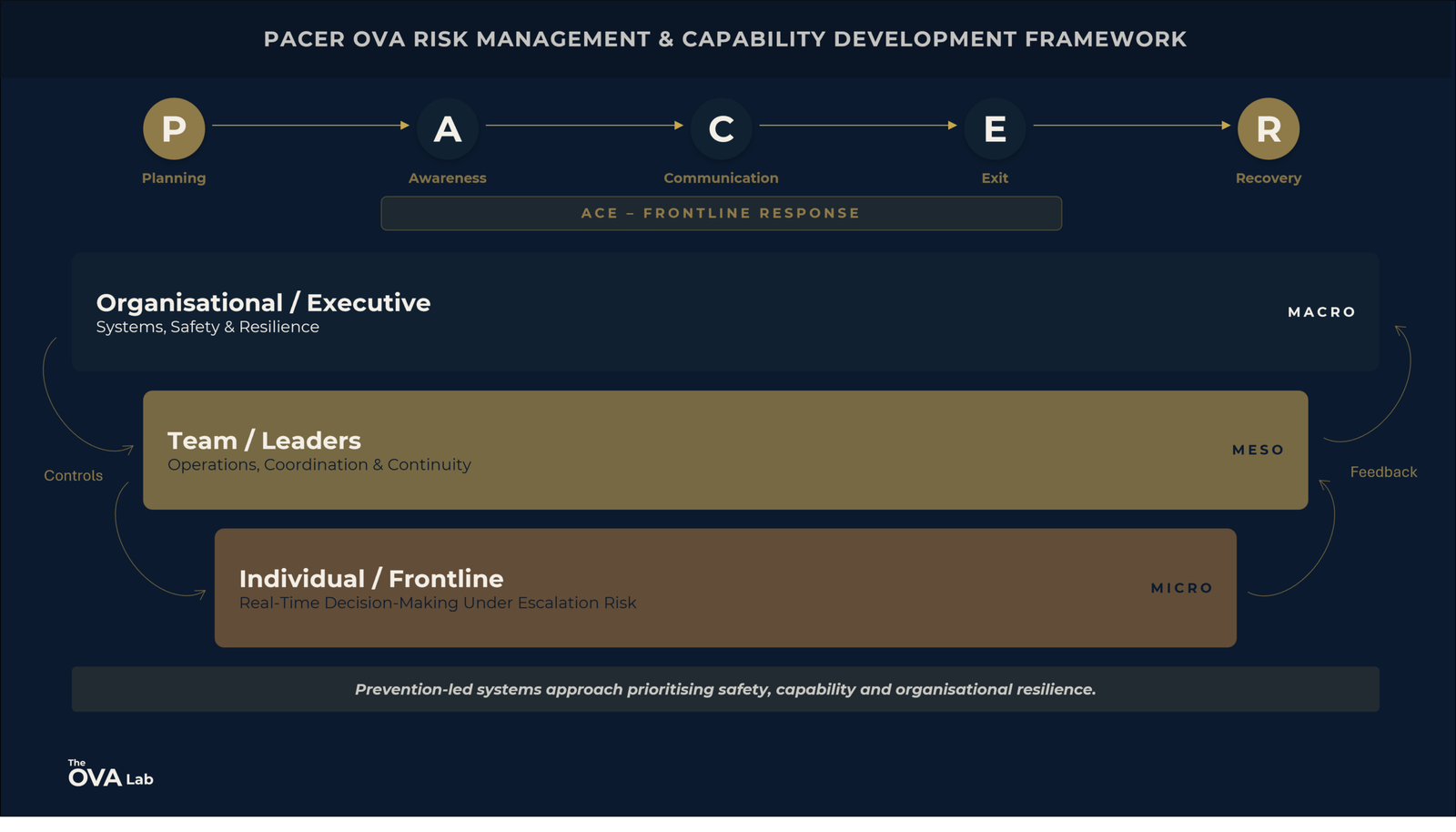
Occupational violence and aggression (OVA) remains one of the most persistent and complex safety challenges facing organisations today, particularly those delivering frontline regulatory, health, council, and community services. Too often, organisational responses are reactive: focused on incident reporting, post-event debriefs, and individual resilience. While these matter, they don’t address the systemic conditions that allow risk…
-
Why Leaders Must Treat Workload as a Violence & Bullying Prevention Control

Work-related violence is often discussed as a people problem. Leaders hear about difficult clients, aggressive patients, bullying colleagues, and “bad behaviour.” Those factors matter, but they are not the full story. Violence risk is also shaped by how work is designed, resourced, and led. One driver keeps showing up in the research, and it is…
-
Body Warn Cameras – Are They a Risk Control or a Risk Factor?

Body Warn Cameras (BWC) are a commonly used frontline risk control for occupational violence and aggression risks. On the surface, it makes sense – if a person is being filmed, then they’re less likely to be violent. But is that true? Research doesn’t support that conclusion. In fact, several studies suggest that the wearing of…
-
Factors contributing to work-related violence: a systematic review and systems perspective

This is the Author Accepted Manuscript (AAM) of the article published in Safety Science. This version has not undergone journal copyediting, formatting, or typesetting. The final published version is available at: https://doi.org/10.1016/j.ssci.2022.105859 Published CitationSheppard, D. M., Newnam, S., Louis, R. M. S., & Perrett, M. S. (2022). Factors contributing to work-related violence: A systematic review…
-
Can a Strong Workplace Violence Prevention Climate Prevent Occupational Violence and Aggression?
Workplace violence, ranging from verbal harassment to physical assaults, represents a serious occupational hazard in many industries. In response, researchers have increasingly focused on the concept of workplace violence prevention climate, which refers to employees’ shared perceptions of their organisation’s policies, practices, and commitment to preventing violence (Spector et al., 2007). This construct is modelled…
-
How Management Commitment and Safety Climate Reduce Workplace Violence
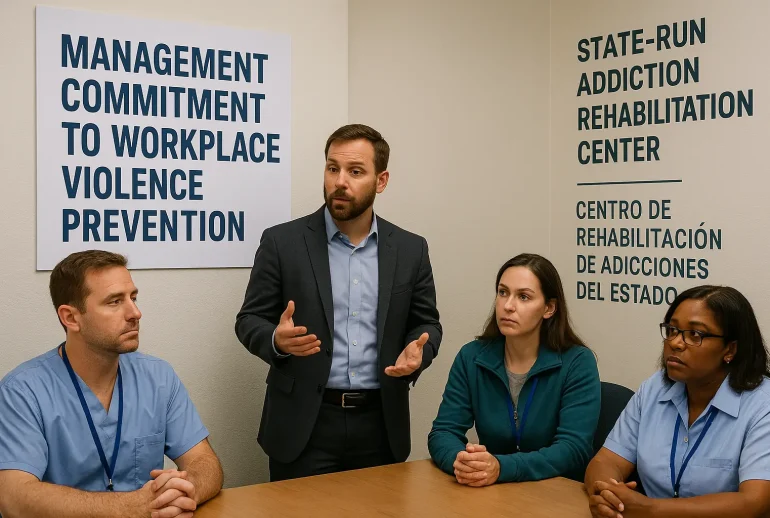
In the high-stakes environment of state-run residential addiction treatment centres, the safety of both staff and clients is paramount. Yet, workplace violence remains a significant concern, with incidents ranging from verbal threats to physical assaults. Can management commitment and safety culture play a pivotal role in preventing such violence? A research summary of:Lipscomb J, London…
-
How does role overload impact workplace violence prevalence?

Occupational violence and aggression (OVA) is a pervasive issue in the healthcare sector, affecting the safety and wellbeing of nursing and caring professionals. Research from Monash University sheds light on the prevalence, sources, and predictors of OVA, as well as the critical role of workplace safety measures in mitigating these incidents. This post delves into…
-
Do Body-Worn Cameras Prevent Workplace Violence?

In recent years, the use of body-worn cameras (BWCs) has become increasingly prevalent in various professional settings, particularly within law enforcement and regulatory authorities. These devices are primarily employed to enhance transparency and accountability. However, their potential to mitigate workplace violence has garnered significant attention. This summary explores the effects of BWCs on workplace violence,…
-
How Can Thoughtful Emergency Department Design Reduce the Risk of Violence and Improve Staff Wellbeing?
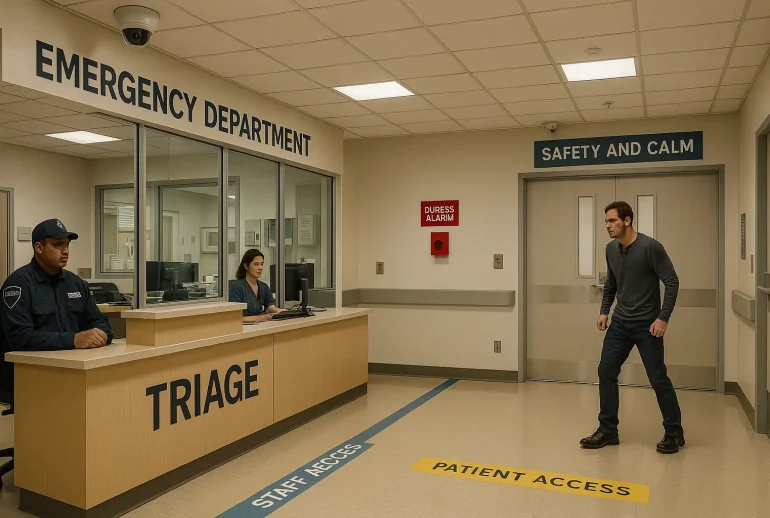
Violence in healthcare settings, especially within hospital emergency departments (EDs), has reached alarming levels worldwide, contributing to physical harm, psychological distress, increased staff turnover, and ballooning organisational costs. While aggression in EDs is often framed as a behavioural or cultural issue, growing evidence suggests that the built environment may play a decisive role in either…