
Research report
Executive summary
Occupational violence and aggression, often referred to as OVA, workplace violence, work-related violence, workplace aggression, occupational aggression, client-initiated violence, customer aggression, patient aggression, third-party violence, verbal abuse, threats, harassment, bullying, mobbing, sexual harassment, gender-based violence, intimidation, physical assault and psychosocial harm, is a major workplace health and safety issue across healthcare, education, social services, public administration, policing, security, transport, retail, construction and other public-facing industries.
The available evidence does not support a simple conclusion that one gender universally experiences more work-related violence and aggression than another. Instead, gender differences depend strongly on the type of violence measured, the occupation, the work setting, the source of aggression, the level of public contact, the degree of organisational hierarchy, the geographic region, the reporting method and the cultural context.
Across the literature, three broad findings are clear.
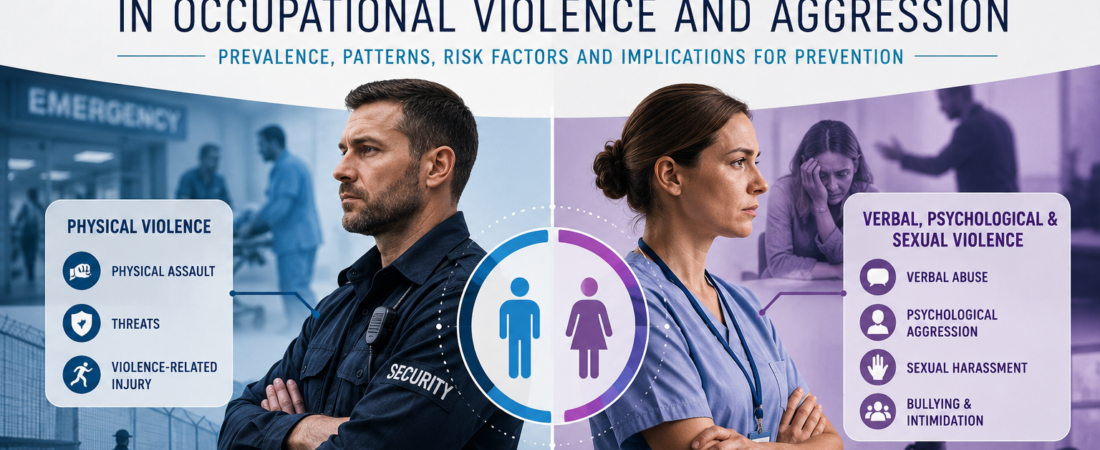
First, male workers are more often exposed to physical violence, particularly in high-acuity, high-conflict, security-related, psychiatric, emergency, correctional, public safety and violence-response roles. Studies of nurses, doctors, emergency workers, security guards and general workforce surveillance data repeatedly show higher male exposure to physical assault, threats of assault or violence-related injury (Carey & Hendricks, 2023; Edward et al., 2016; Firenze et al., 2020; Gerberich et al., 2004; Leino et al., 2011; Nøland et al., 2021).
Second, female workers are more often exposed to verbal aggression, psychological aggression, sexual harassment, gender-based harassment, bullying and other non-physical forms of occupational violence and aggression. This pattern is especially strong in healthcare, construction, industrial work, education, service work and male-dominated or strongly hierarchical workplaces (Debnath et al., 2025; Jónsdóttir et al., 2022; Lanthier et al., 2018; Nelson et al., 2024; Parodi et al., 2023; Park et al., 2022; Saberi et al., 2019).
Third, where studies measure “any workplace violence” as a composite category, overall prevalence may appear similar between men and women, or may favour either group depending on the sector and region. A COVID-era meta-analysis of healthcare workers found almost identical overall prevalence for women and men globally, but with higher rates toward men in Asia and higher rates toward women in Latin America (Matta et al., 2024). This helps explain why gender findings in workplace violence research often appear inconsistent: the apparent answer changes when physical assault, verbal abuse, sexual harassment, threats, bullying and psychological violence are combined into a single measure.
The practical implication is that organisations should not rely on generic, gender-neutral violence prevention strategies alone. Nor should they assume that gender explains risk in isolation. A robust occupational violence and aggression prevention system should identify how gender interacts with role design, work location, shift patterns, public contact, power imbalance, job status, workplace culture, psychosocial hazards, reporting pathways, leadership response and organisational controls.
1. Introduction
Occupational violence and aggression is a broad term for violence, aggression, threats, harassment, intimidation, abuse and harmful conduct connected to work. In workplace health and safety practice, OVA overlaps with related terms including workplace violence, work-related violence, workplace aggression, occupational violence, client aggression, customer-perpetrated violence, patient and visitor violence, third-party violence, lateral violence, bullying, mobbing, harassment, sexual harassment, gender-based violence, threats, physical assault, verbal abuse and psychosocial risk.
The terminology varies across industries and jurisdictions. Healthcare literature often uses “workplace violence against healthcare workers,” “patient and visitor violence,” “violence against nurses,” “violence against doctors” or “aggression in healthcare settings.” Education and public sector studies may use “violence and threats,” “harassment,” “bullying” or “occupational aggression.” Gender-focused studies commonly use “workplace sexual harassment,” “gender-based violence,” “sexual violence,” “sexual harassment and violence,” “gender discrimination” and “violence against women workers.”
For search, research, and prevention purposes, these terms should not be treated as unrelated. They describe overlapping forms of exposure within a wider system of occupational violence and aggression and psychosocial risk.
This report examines how the prevalence of occupational violence and aggression differs by gender, with a focus on male and female workers because most of the available research uses binary sex or gender categories. The report also notes the limitations of that evidence base, including the relative lack of high-quality prevalence data for transgender, gender diverse and non-binary workers.
The report is designed to support a broad evidence-informed understanding of OVA as both a physical safety risk and a psychosocial hazard. It draws on healthcare, public sector, emergency services, security, construction, education, industrial and general workforce research to explain where gender differences are most consistent, where the evidence is mixed and how organisations should interpret gender as one element of a wider risk system.
2. Scope and definitions
2.1 Occupational violence and aggression
Occupational violence and aggression refers to incidents in which workers are abused, threatened, assaulted, harassed or exposed to aggressive behaviour in circumstances related to their work. It may involve physical violence, verbal aggression, intimidation, threats, sexual harassment, bullying, mobbing, psychological abuse, racial harassment, gender-based harassment or other behaviours that create risk to physical or psychological health.
In many studies, workplace violence includes both physical and non-physical behaviours. Physical violence includes assault, hitting, kicking, pushing, biting, use of weapons, restraint-related assault and violence-related injury. Non-physical violence includes verbal abuse, shouting, insults, threats, intimidation, humiliation, bullying, mobbing, harassment, stalking, sexual harassment, racial harassment and psychological aggression.
The broadest interpretation of OVA includes conduct from external parties and internal workplace sources. External sources include patients, clients, customers, students, members of the public, offenders, visitors, families, relatives, contractors and service users. Internal sources include coworkers, supervisors, managers, subordinates, senior colleagues and organisational representatives.
2.2 Gender and sex in the evidence base
The available literature often uses the terms “sex” and “gender” inconsistently. Many studies report “male” and “female” without clearly distinguishing biological sex from gender identity. Most prevalence estimates are therefore best interpreted as male/female comparisons within the categories used by each study, rather than as a complete account of gender identity.
This is a major limitation. Occupational violence and aggression research has historically under-examined transgender, gender diverse and non-binary workers. Recent work has begun to consider gender diversity in healthcare worker samples, but the evidence remains too limited to draw stable prevalence estimates across industries (Stufano et al., 2025).
3. Overview of the evidence base
The evidence on gender differences in occupational violence and aggression is strongest in healthcare. This includes studies of nurses, doctors, paramedics, emergency department workers, mental health workers, medical practitioners, allied health professionals and healthcare support staff. Healthcare dominates the evidence base because violence against healthcare workers is common, well-studied and frequently associated with patient, visitor and family aggression.
However, important evidence also comes from security, policing, construction, education, industrial work, social work, domestic and family violence services, public sector work and general workforce studies (Lanthier et al., 2018; Leino et al., 2011; Natalier et al., 2020; Newhill, 1996; Park et al., 2022; Saberi et al., 2019; Santos et al., 2009; Tiesman et al., 2013; van den Bossche et al., 2013).
Most studies are cross-sectional surveys using self-reported exposure over the previous 12 months. Some use workers’ compensation claims, emergency department injury data, official incident reports or longitudinal cohort designs. This matters because gender differences may vary depending on whether violence is self-reported, formally reported, clinically recorded or captured through compensation systems. Underreporting is a persistent issue in occupational violence and aggression research, and gender norms may influence whether workers recognise, label, report or minimise different forms of violence (Acquadro Maran et al., 2019; Rosander et al., 2020).
The evidence base includes large national and international studies, systematic reviews, meta-analyses, cohort studies, registry analyses and single-site workplace surveys. The strongest quantitative patterns relate to three areas: physical violence, verbal or psychological aggression and sexual harassment. The weakest evidence relates to gender diverse workers, intersectional analysis and consistent cross-sector measurement outside healthcare.
4. Overall gender patterns in workplace violence and aggression
The headline finding is not that men or women are universally more exposed to workplace violence and aggression. The more accurate finding is that men and women often experience different forms of OVA, in different settings, through different pathways.
In some healthcare studies, female workers report higher overall workplace violence. In Latin American physicians and nurses, women reported workplace violence at 65.8% compared with 50.4% for men (Parodi et al., 2023). In maternal and child health settings in Pakistan, female providers reported violence at 93.2% compared with 81.7% for male providers (Otho & Mufaddal, 2025). In Italian healthcare workers, female gender was associated with a higher overall risk of aggression (Ielapi et al., 2021). Brazilian nursing research also found substantially higher verbal abuse among women (Ceballos et al., 2020).
Other healthcare studies find higher overall workplace violence among men. A systematic review and meta-analysis of healthcare professionals in India reported pooled prevalence of 64% for males and 54% for females (Hossain et al., 2020). Chinese hospital data from Shandong found workplace violence prevalence of 61.4% for male healthcare workers and 48.8% for female healthcare workers (Sun et al., 2022). A Norwegian longitudinal physician cohort found male physicians at higher risk of threats and acts of violence across career stages (Nøland et al., 2021).
The most useful explanation is that overall prevalence depends on what is being counted. If the study environment has high rates of physical assault, male prevalence may appear higher. If the study environment has high rates of verbal abuse, sexual harassment, bullying or psychological aggression, female prevalence may appear higher. If all types are combined, the result may be similar between groups.
Matta et al. (2024) found this pattern clearly in a global COVID-era meta-analysis of healthcare workers. Overall workplace violence prevalence was nearly identical between women and men, but regional differences were substantial: workplace violence was higher toward men in Asia and higher toward women in Latin America.
This means that broad claims about “which gender experiences more workplace violence” are usually too blunt to be useful. A more accurate risk question is: which gender is more exposed to which form of occupational violence and aggression, in which role, from which source, under which conditions and with what consequences?
5. Physical violence: higher male exposure in many high-risk settings
Physical violence is the form of occupational violence and aggression most consistently associated with higher male exposure. This does not mean men are inherently more vulnerable. Rather, men are frequently placed in roles, departments, shifts and tasks with greater physical confrontation risk.
A systematic review and meta-analysis of aggression against nurses found that male nurses had greater odds of physical abuse, while female nurses had greater odds of verbal abuse (Edward et al., 2016). Italian multicentre data found male doctors had significantly higher risk of physical aggression (Firenze et al., 2020), and another Italian study found male gender independently associated with physical aggression among healthcare workers (La Torre et al., 2022a). Chinese hospital data similarly found males at higher risk for physical violence (Sun et al., 2023).
The Minnesota Nurses’ Study reported adjusted physical violence rates of 19.4 per 100 person-years for male nurses and 12.9 per 100 person-years for female nurses (Gerberich et al., 2004). United States emergency department injury surveillance data found male healthcare workers sustained violence-related injuries at substantially higher rates than female healthcare workers (Carey & Hendricks, 2023).
The same pattern extends beyond healthcare. Finnish security guards showed much higher male exposure across verbal aggression, threats and physical acts, with men reporting physical acts at three times the rate of women (Leino et al., 2011). United States national surveillance found higher violent workplace crime rates for men than women (Siegel et al., 2020). In policing, public safety and security-related roles, physical confrontation is often embedded in role expectations and task allocation, which may elevate male exposure (Santos et al., 2009; Svedberg & Alexanderson, 2012).
The strongest risk environments for physical violence include psychiatric wards, emergency departments, correctional settings, security work, public safety, ambulance and paramedicine, alcohol- and drug-affected client contact, night work, lone work, restraint-related situations and crisis response roles (Estryn-Behar et al., 2007; Gates et al., 2011; Ghaziri et al., 2019; Jang et al., 2021; Koritsas et al., 2009; Olschowka & Möckel, 2021).
The implication is important for workplace safety governance. Higher male rates of physical violence should not be treated as a natural feature of male work. They should be treated as a signal about job design, task allocation, escalation expectations, staffing, security, clinical acuity, enforcement functions, environmental design and the adequacy of controls.
6. Verbal aggression and psychological violence: higher female exposure in many studies
Verbal abuse, insults, intimidation, threats, humiliation, psychological aggression and other non-physical forms of workplace violence are more commonly reported by female workers in many studies, although the pattern is not universal.
Edward et al. (2016) found female nurses had higher odds of verbal abuse than male nurses. Italian healthcare research found verbal aggression was higher among female workers, while physical aggression was higher among male workers (Ielapi et al., 2021). Studies of doctors in Rome and healthcare workers in Romania also found higher verbal aggression or verbal violence toward women (Marte et al., 2019; Rusu et al., 2025). In Latin American healthcare, verbal and emotional violence were prominent and more commonly experienced by women (Parodi et al., 2023).
Psychological aggression is often connected to hierarchy, gendered workplace culture and power imbalance. Women may be more exposed where they occupy lower-status roles, are underrepresented in leadership, work in male-dominated environments or are expected to absorb emotional labour from patients, clients, families, customers and colleagues. In healthcare, this can include aggression from patients, visitors, doctors, supervisors, colleagues or attendants. In construction and industrial work, it may involve supervisors, senior male colleagues, contractors or site personnel (Park et al., 2022; Saberi et al., 2019).
Nelson et al. (2024) concluded that women in the global health workforce more often experience non-physical violence, including verbal abuse, sexual harassment and bullying, while men more often experience physical violence. This distinction is essential for OVA risk management because non-physical violence is often normalised, underreported and misclassified as “difficult behaviour,” “customer service pressure,” “interpersonal conflict” or “part of the job.”
For many workers, repeated verbal aggression can be as organisationally significant as isolated physical incidents. Chronic exposure to shouting, insults, threats, intimidation, humiliation, sexist comments or degrading treatment may create cumulative psychosocial harm, particularly when the organisation fails to respond or treats repeated aggression as routine.
7. Sexual harassment and gender-based violence: consistently higher risk for women
Workplace sexual harassment and sexual violence show the clearest gender difference in the occupational violence and aggression literature. Female workers are consistently at substantially higher risk across sectors, regions and study designs.
In a meta-analysis of violence against paramedics, physical and verbal violence did not show strong gender differences, but sexual harassment was four times higher among women than men: 24% compared with 6% (Shabanikiya et al., 2021). Italian healthcare research found female gender independently associated with sexual harassment (La Torre et al., 2022b). Japanese hospital research identified female sex as a risk factor for sexual harassment (Fujita et al., 2012). Italian nursing research identified female gender as a predictor of sexual assault (Pucciarelli et al., 2020).
The pattern is not limited to healthcare. A Korean study of construction health managers found female managers experienced significantly higher sexual harassment than male counterparts in a male-dominated construction environment (Park et al., 2022). An Icelandic national cohort of women found 33.5% lifetime workplace sexual harassment or violence prevalence, with current workplace exposure highest in public-facing, tourism, legal/security and other high-contact sectors (Jónsdóttir et al., 2022). A systematic review and meta-analysis of female workers across sectors estimated pooled workplace sexual violence prevalence at 26%, with high prevalence in healthcare and in several global regions (Debnath et al., 2025).
Sexual harassment is not simply another subtype of workplace incivility. It is strongly linked to gendered power relations, male-dominated work cultures, occupational hierarchy, insecure employment, minority status, tolerance of sexist behaviour, poor reporting confidence and ineffective organisational response (Bacharach et al., 2007; Lo et al., 2024; Newman et al., 2011; Richman et al., 1999).
For OVA prevention, sexual harassment should be treated as part of the wider workplace violence and psychosocial risk system. It involves unwanted conduct, power, threat, humiliation, intimidation and harm. It may come from customers, clients, patients, visitors, contractors, supervisors, coworkers or senior leaders. Where sexual harassment is separated from workplace violence prevention, organisations may miss the shared underlying risk factors: poor control of behaviour, weak leadership response, normalisation of aggression, unsafe reporting pathways and inadequate accountability.
8. Bullying, mobbing and workplace harassment
The gender pattern for workplace bullying and mobbing is more mixed than for sexual harassment or physical violence. Some studies find higher bullying risk among women. Others find no significant gender difference. Some find that men are more likely to meet behavioural criteria for bullying but less likely to label themselves as bullied.
A systematic review of workplace bullying risk factors found women were at higher risk in many studies, with increased odds reported across multiple populations (Feijó et al., 2019). Italian healthcare data found females more affected by bullying and sexual harassment (La Torre et al., 2022b). However, a large Swedish longitudinal study found men more likely to be identified as bullied using behavioural criteria, while women were more likely to self-label as bullied (Rosander et al., 2020). A Danish representative population study found workplace type and gender composition more important than gender alone (Ortega et al., 2009).
This distinction matters for OVA reporting systems. If men are less likely to describe repeated negative acts as “bullying,” self-report tools may underestimate male exposure. If women are more likely to experience bullying through hierarchical, sexualised or gendered pathways, behavioural checklists may miss the power and context of the harm. Prevention systems should therefore measure both behaviours and perceived impact.
Bullying and mobbing also demonstrate the overlap between OVA and psychosocial risk. Repeated unreasonable behaviour, social exclusion, humiliation, intimidation, undermining, excessive criticism and abuse of authority can cause psychological injury even when no physical threat is present. For this reason, bullying should be considered part of a broader OVA and psychosocial risk governance framework rather than a separate human resources issue.
9. Occupational role and work setting modify gender risk
Gender differences in OVA cannot be separated from occupational role. Men and women are often distributed differently across roles, shifts, departments, authority levels and exposure types. This occupational segregation can create apparent gender differences that are actually role-based, setting-based or task-based.
In Australian medical practitioners, gender differences varied by doctor type: male general practitioners and GP registrars experienced more external aggression than female counterparts, while female specialists experienced more external and internal aggression than male specialists (Hills, 2017). In Brazil, higher female exposure in bivariate analysis became non-significant after adjustment for occupational variables, suggesting that role and work characteristics explained much of the difference (Simões et al., 2020). In Canada, work characteristics substantially explained sex/gender differences in physical workplace violence, but did not explain sexual workplace violence to the same extent (Lanthier et al., 2018).
High-risk settings repeatedly include psychiatric services, emergency departments, acute care, public hospitals, aged care, correctional healthcare, ambulance services, security work, schools, public-facing government services and roles involving enforcement, refusal, waiting times, distress, pain, intoxication, cognitive impairment, mental illness or crisis escalation (Estryn-Behar et al., 2007; Gates et al., 2011; Ghaziri et al., 2019; Jang et al., 2021; Tiesman et al., 2013).
For men, elevated physical violence risk is often linked to assignment into physically confrontational or high-acuity roles. For women, elevated non-physical and sexual violence risk is often linked to lower occupational status, gendered expectations, public-facing emotional labour, male-dominated environments, hierarchical dependence and cultural tolerance of harassment.
This means a mature OVA risk assessment should not ask only whether gender is associated with violence. It should ask how gender interacts with role allocation, authority, exposure to the public, expected emotional labour, shift type, lone work, staffing profile, team composition, reporting safety and leadership response.
10. Age, career stage and experience
Younger workers and less experienced workers are consistently more vulnerable to occupational violence and aggression. This applies across genders, but the pathway may differ.
A Norwegian 20-year physician cohort found workplace violence was more common earlier in medical careers, with male physicians retaining higher risk for threats and violence across career stages (Nøland et al., 2021). Nelson et al. (2024) identified younger age, lower professional status, less experience and hierarchical position as important gender-sensitive risk factors in the global health workforce. Ajuwa et al. (2024) similarly found that shorter work experience, lower occupational position and low support at work were risk factors for workplace violence against female healthcare workers.
For female workers, early career risk may be linked to lower status, limited authority, insecure employment, reduced confidence in reporting, exposure to supervisors or senior colleagues, and lack of organisational power. For male workers, early career risk may be linked to deployment into physically demanding, high-acuity or higher-contact roles, especially in psychiatry, emergency response, security and public safety.
Career stage is therefore a prevention issue. New workers, trainees, interns, junior doctors, graduate nurses, early-career teachers, new public-facing officers, junior case workers and recently appointed frontline staff may require stronger supervision, clearer escalation pathways, better local induction, practical OVA training, mentoring and post-incident support.
11. Shift work, night work and working patterns
Night shift, rotating shift work, long shifts and after-hours work are repeatedly associated with higher OVA exposure. These conditions often involve reduced staffing, fatigue, lower supervision, increased client distress, higher acuity, intoxication, longer waiting times and fewer immediate supports.
Female healthcare workers on night shifts had higher assault risk in workers’ compensation data (Islam et al., 2003). Female industrial workers in Iran had higher verbal violence risk when working night shifts (Saberi et al., 2019). The Icelandic cohort found shift work was one of the strongest predictors of workplace sexual harassment and violence among women (Jónsdóttir et al., 2022). Romanian healthcare data found shift and night work increased verbal violence risk for nurses and doctors (Rusu et al., 2025). Chinese healthcare data found night duty frequency independently associated with physical and verbal violence (Sun et al., 2023).
Shift work is therefore not just a scheduling issue. It is a psychosocial risk factor and an occupational violence and aggression exposure factor. Controls should include staffing, skill mix, fatigue management, escalation support, environmental design, supervision, reporting pathways and post-incident recovery systems.
A gender-informed approach should consider whether night work and shift allocation expose male and female workers to different risks. For example, male workers may be more likely to be called to physically intervene in violent incidents, while female workers may face increased sexual harassment, intimidation or vulnerability during isolated, low-staffing or after-hours work.
12. Source of violence and gendered perpetration patterns
The source of OVA differs by sector. In healthcare, patients and relatives are often the most common perpetrators. In security, policing and public-facing enforcement roles, members of the public may be the main source. In education, students, parents and colleagues may all be relevant. In construction, universities, healthcare hierarchies and professional services, colleagues and supervisors may be more prominent sources of harassment or bullying.
Healthcare studies consistently identify patients, visitors and family members as major perpetrators of violence against both male and female workers (Campbell et al., 2011; Fujita et al., 2012; Gerberich et al., 2004; Ielapi et al., 2021). However, female workers may be more exposed to violence from patients’ relatives, supervisors, clients or male colleagues in some contexts, while male workers may be more exposed to peer-level physical confrontation or public violence (Acquadro Maran et al., 2019; Lippel, 2001; Siegel et al., 2020).
Sexual harassment and gender-based violence are more likely to involve male perpetrators where perpetrator gender is reported (Ajuwa et al., 2024; Zampieron et al., 2010). In male-dominated construction environments, female health managers reported violence from superiors and colleagues, often within hierarchical male workplace structures (Park et al., 2022). In Pakistan, female nurses identified male coworkers, patients and attendants as sources of violence (Jafree, 2017).
These patterns matter because controls for third-party violence are not the same as controls for internal workplace harassment. Patient violence may require environmental design, clinical risk assessment, security response, staffing and escalation controls. Supervisor harassment requires governance, reporting independence, leadership accountability, culture change and consequences. Sexual harassment requires prevention of gender-based power abuse, not merely general conflict resolution.
13. Psychological consequences and gender
Although men may experience more physical violence in many settings, women often report more severe psychological consequences following occupational violence and aggression. This does not mean men are unaffected. Rather, the type of violence, the source of violence, social expectations, reporting norms, prior exposure, organisational response and perceived safety all influence outcomes.
Geoffrion et al. (2018) found men were more frequently exposed to serious violent acts, but women reported more post-traumatic reactions, including avoidance, hypervigilance and intrusive symptoms. Mental health worker research found verbal aggression was significantly associated with burnout among women, with gender moderating the relationship between aggression and burnout (Aguglia et al., 2020). Palestinian nursing research found female nurses exposed to verbal aggression or any workplace aggression reported higher psychosomatic symptoms, while male nurses’ symptoms were more strongly linked to bullying (Jaradat et al., 2018). A Danish population-based study found work-related violence and threats increased risk of depression and stress disorders, with some gender-specific patterns in diagnostic outcomes (Wieclaw et al., 2006).
Psychological harm following OVA is also shaped by whether the organisation responds effectively. Poor organisational response, normalisation of aggression, lack of reporting confidence, blame, silence, weak investigation, absence of recovery support and repeated exposure can convert single events into chronic psychosocial risk.
This is particularly important for workplaces that treat OVA as an incident response issue only. The consequences of violence and aggression are not limited to immediate physical injury. They may include fear, sleep disturbance, burnout, anxiety, depression, post-traumatic stress symptoms, moral distress, reduced work ability, absenteeism, presenteeism, turnover intention and loss of trust in leadership.
14. Why the evidence appears inconsistent
The gender evidence in OVA research can appear contradictory because studies measure different things.
A study focused on physical assault in emergency departments, psychiatric wards or security work is likely to find higher male exposure. A study focused on sexual harassment, gender-based harassment or workplace bullying is likely to find higher female exposure. A study combining physical violence, verbal abuse, bullying and sexual harassment into “any workplace violence” may find either no difference, higher male prevalence or higher female prevalence depending on the base rate of each subtype.
There are four main mechanisms.
14.1 Type-of-violence reversal
Physical violence is more often higher among men; verbal, psychological and sexual violence are more often higher among women. Composite “any violence” measures can hide this reversal.
14.2 Occupational assignment
Men and women are not evenly distributed across roles, departments, shifts or tasks. Male workers may be assigned to physical intervention, security, high-acuity psychiatric or confrontational roles. Female workers may be concentrated in lower-status, patient-facing, service, care or administrative roles with high exposure to verbal abuse and harassment.
14.3 Structural power imbalance
Female workers’ exposure to verbal, psychological and sexual violence is strongly shaped by gender hierarchy, lower occupational status, male-dominated cultures, supervisor power, client power and weak reporting protection.
14.4 Reporting and labelling differences
Men may be less likely to label experiences as bullying, harassment or victimisation, while women may be more likely to identify certain behaviours as harassment or abuse. Administrative systems also capture only a fraction of actual exposure.
These mechanisms do not compete with each other. They operate together. Gender differences in OVA are best understood as a product of exposure type, job design, work setting, workplace culture, power relations and reporting systems.
15. Implications for OVA prevention and psychosocial risk management
A gender-informed OVA prevention system should not treat gender as a standalone risk factor. It should examine how gender interacts with work design, role allocation, public contact, authority, shift work, workplace culture, reporting confidence, leadership response and organisational controls.
Practical implications include the following.
15.1 Measure violence by subtype
Organisations should separately track physical assault, threats, verbal abuse, intimidation, bullying, sexual harassment, racial harassment, customer aggression, client aggression, patient aggression and internal harassment. A single “violence” category is too blunt for meaningful prevention.
15.2 Avoid relying only on “any workplace violence”
Composite measures hide important gendered patterns and can misdirect prevention resources. If an organisation reports only total incidents, it may miss that male workers are experiencing more physical assaults while female workers are experiencing more sexual harassment, verbal aggression or bullying.
15.3 Identify high-risk work settings
Emergency departments, psychiatric wards, public-facing counters, enforcement roles, security roles, schools, transport, aged care, social services, ambulance work and correctional settings require specific controls. These controls should be based on exposure, not assumptions about worker resilience.
15.4 Treat sexual harassment as a core OVA and psychosocial risk issue
Sexual harassment should not be managed separately from workplace violence, bullying or psychosocial hazard management. It involves aggression, power, intimidation, threat and harm.
15.5 Examine job design and task allocation
If male workers are disproportionately assigned to physical confrontation roles, the risk is not “male gender” alone. It is role design, staffing, expectations and control failure. Organisations should avoid informal practices where male workers are expected to absorb violent incidents because they are perceived as more physically capable.
15.6 Examine hierarchy and workplace culture
If female workers are disproportionately exposed to verbal abuse, sexual harassment or bullying, controls must address power imbalance, leadership accountability and reporting safety. Training alone is unlikely to be sufficient where gendered aggression is embedded in culture or tolerated by leadership.
15.7 Strengthen reporting systems
Reporting should capture low-level aggression, repeated exposure, threats, near misses, sexual harassment, bullying, psychological violence and cumulative harm. Reporting systems should also distinguish source of aggression, location, time, task, worker role, gender, outcome and organisational response.
15.8 Provide recovery and post-incident support
Psychological harm after OVA is not determined only by the incident. Organisational response is a critical control. Workers are more likely to be harmed when incidents are minimised, blamed on the worker, ignored, poorly investigated or treated as routine.
15.9 Use gender-sensitive but not stereotype-based prevention
Male workers should not be assumed to be naturally suited to physical risk. Female workers should not be expected to tolerate verbal abuse, sexualised behaviour or emotional labour. Gender-sensitive risk management should identify exposure patterns without reinforcing stereotypes.
15.10 Integrate OVA into psychosocial risk governance
Occupational violence and aggression is both a physical safety risk and a psychosocial hazard. It should be managed through risk assessment, prevention controls, escalation systems, training, supervision, monitoring, assurance and organisational learning.
16. Limitations of the evidence
The evidence base has several limitations.
First, most studies use binary male/female categories and do not adequately examine transgender, gender diverse or non-binary workers.
Second, definitions of workplace violence differ widely. Some studies include only physical assault. Others include verbal abuse, threats, bullying, sexual harassment, racial harassment and psychological aggression.
Third, most studies rely on self-report surveys, which are vulnerable to recall bias, underreporting and differences in how workers interpret violence, aggression, bullying or harassment.
Fourth, healthcare is overrepresented. The evidence is strongest for healthcare workers and less complete for local government, regulators, retail, transport, utilities, customer service, education, social services and other public-facing sectors.
Fifth, many studies are cross-sectional, limiting causal interpretation.
Sixth, cultural and regional variation is substantial. Gender differences in workplace violence cannot be assumed to be the same across countries, industries or organisational settings.
Seventh, many studies do not separate the source of violence clearly. This makes it difficult to compare third-party violence, coworker aggression, supervisor harassment, customer abuse and gender-based harassment.
Eighth, reporting systems may capture physical violence better than verbal, psychological or sexual forms of aggression. This may distort organisational understanding of prevalence, severity and control effectiveness.
17. Conclusion
The prevalence of occupational violence and aggression differs by gender, but not in a single universal direction. Male workers are more often exposed to physical violence, threats of assault and violence-related injury in high-acuity, security, emergency, psychiatric and public safety settings. Female workers are more often exposed to verbal aggression, psychological violence, sexual harassment, gender-based violence, bullying and harassment, especially in hierarchical, public-facing and male-dominated environments.
Overall workplace violence prevalence may appear similar between men and women when all violence types are combined. However, this similarity can be misleading. The underlying exposure profile is often different. Men and women may face similar levels of total OVA burden while experiencing different forms of harm, different perpetrators, different reporting barriers and different consequences.
For organisations, regulators and safety leaders, the lesson is clear: occupational violence and aggression should be managed as a systems risk. Gender matters, but it matters through work design, role allocation, exposure type, occupational hierarchy, culture, reporting, leadership response and psychosocial risk controls. Effective OVA prevention requires more than frontline de-escalation training. It requires a mature, evidence-informed system that prevents violence where possible, reduces exposure where risk cannot be eliminated, supports workers after incidents, learns from patterns and treats workplace violence and aggression as a core governance issue.
References
Acquadro Maran, D., Cortese, C. G., Pavanelli, P., Fornero, G., & Gianino, M. M. (2019). Gender differences in reporting workplace violence: A qualitative analysis of administrative records of violent episodes experienced by healthcare workers in a large public Italian hospital. BMJ Open. https://doi.org/10.1136/bmjopen-2019-031546
Aguglia, A., Murri, M. B., Conigliaro, C., Cipriani, N., Vaggi, M., Di Salvo, G., Maina, G., & Serafini, G. (2020). Workplace violence and burnout among mental health workers. Psychiatric Services. https://doi.org/10.1176/appi.ps.201900161
Ajuwa, M.-E. P., Veyrier, C.-A., Cabrolier, L. C., Chastang, J.-F., & Niedhammer, I. (2024). Workplace violence against female healthcare workers: A systematic review and meta-analysis. BMJ Open. https://doi.org/10.1136/bmjopen-2023-079396
Bacharach, S. B., Bamberger, P. A., & McKinney, V. M. (2007). Harassing under the influence: The prevalence of male heavy drinking, the embeddedness of permissive workplace drinking norms, and the gender harassment of female coworkers. Journal of Occupational Health Psychology. https://doi.org/10.1037/1076-8998.12.3.232
Campbell, J. C., Messing, J. T., Kub, J., Agnew, J., Fitzgerald, S., Fowler, B., Sheridan, D., Lindauer, C., Deaton, J., & Bolyard, R. (2011). Workplace violence: Prevalence and risk factors in the Safe at Work Study. Journal of Occupational and Environmental Medicine. https://doi.org/10.1097/JOM.0b013e3182028d55
Carey, I., & Hendricks, K. (2023). Workplace violence against healthcare workers using nationally representative estimates of emergency department data, 2015–2017. American Journal of Industrial Medicine. https://doi.org/10.1002/ajim.23463
Ceballos, J. B., Frota, O. P., Nunes, H. F. S. S., et al. (2020). Physical violence and verbal abuse against nurses working with risk stratification: Characteristics, related factors, and consequences. Revista Brasileira de Enfermagem. https://doi.org/10.1590/0034-7167-2019-0882
Debnath, A., Goel, K., P. A., et al. (2025). Workplace sexual harassment and violence among women: A systematic review and meta-analysis. Women & Health. https://doi.org/10.1080/03630242.2025.2478378
Edward, K., Stephenson, J., Ousey, K., Lui, S., Warelow, P., & Giandinoto, J. A. (2016). A systematic review and meta-analysis of factors that relate to aggression perpetrated against nurses by patients/relatives or staff. Journal of Clinical Nursing. https://doi.org/10.1111/jocn.13019
Estryn-Behar, M., Duville, N., Menini, M.-L., et al. (2007). Factors associated with violence against healthcare workers: Results of the European Presst-Next study. Presse Médicale. https://doi.org/10.1016/J.LPM.2006.07.007
Feijó, F. R., Gräf, D. D., Pearce, N., & Fassa, A. G. (2019). Risk factors for workplace bullying: A systematic review. International Journal of Environmental Research and Public Health. https://doi.org/10.3390/ijerph16111945
Firenze, A., Santangelo, O. E., Gianfredi, V., et al. (2020). Violence on doctors: An observational study in Northern Italy. La Medicina del Lavoro. https://doi.org/10.23749/mdl.v111i1.8795
Fujita, S., Ito, S., Seto, K., Kitazawa, T., Matsumoto, K., & Hasegawa, T. (2012). Risk factors of workplace violence at hospitals in Japan. Journal of Hospital Medicine. https://doi.org/10.1002/jhm.976
Gates, D. M., Gillespie, G. L., Kowalenko, T., Succop, P., Sanker, M., & Farra, S. L. (2011). Occupational and demographic factors associated with violence in the emergency department. Advanced Emergency Nursing Journal. https://doi.org/10.1097/TME.0b013e3182330530
Geoffrion, S., Goncalves, J., Marchand, A., et al. (2018). Post-traumatic reactions and their predictors among workers who experienced serious violent acts: Are there sex differences? Annals of Work Exposures and Health. https://doi.org/10.1093/annweh/wxy011
Gerberich, S. G., Church, T. R., McGovern, P. M., et al. (2004). An epidemiological study of the magnitude and consequences of work related violence: The Minnesota Nurses’ Study. Occupational and Environmental Medicine. https://doi.org/10.1136/oem.2003.007294
Ghaziri, M. E., Dugan, A., Zhang, Y., Gore, R., & Castro, M. E. (2019). Sex and gender role differences in occupational exposures and work outcomes among registered nurses in correctional settings. Annals of Work Exposures and Health. https://doi.org/10.1093/annweh/wxz018
Hills, D. J. (2017). Differences in risk and protective factors for workplace aggression between male and female clinical medical practitioners in Australia. Australian Health Review. https://doi.org/10.1071/AH16003
Hossain, M. M., Sharma, R., Tasnim, S., Al Kibria, G. M., & Sultana, A. (2020). Prevalence, characteristics, and associated factors of workplace violence against healthcare professionals in India: A systematic review and meta-analysis. medRxiv. https://doi.org/10.1101/2020.01.01.20016295
Ielapi, N., Andreucci, M., Bracale, U. M., et al. (2021). Workplace violence towards healthcare workers: An Italian cross-sectional survey. Nursing Reports. https://doi.org/10.3390/nursrep11040072
Islam, S. S., Edla, S. R., Mujuru, P., Doyle, E. J., & Ducatman, A. M. (2003). Risk factors for physical assault: State-managed workers’ compensation experience. American Journal of Preventive Medicine. https://doi.org/10.1016/S0749-3797(03)00095-3
Jafree, S. R. (2017). Workplace violence against women nurses working in two public sector hospitals of Lahore, Pakistan. Nursing Outlook. https://doi.org/10.1016/j.outlook.2017.01.008
Jang, S. J., Son, Y.-J., & Lee, H. (2021). Prevalence, associated factors and adverse outcomes of workplace violence towards nurses in psychiatric settings: A systematic review. International Journal of Mental Health Nursing. https://doi.org/10.1111/inm.12951
Jaradat, Y., Nielsen, M. B., Kristensen, P., et al. (2016). Workplace aggression, psychological distress, and job satisfaction among Palestinian nurses: A cross-sectional study. Applied Nursing Research. https://doi.org/10.1016/j.apnr.2016.07.014
Jaradat, Y., Nielsen, M. B., & Bast-Pettersen, R. (2018). Psychosomatic symptoms among Palestinian nurses exposed to workplace aggression. American Journal of Industrial Medicine. https://doi.org/10.1002/ajim.22851
Jónsdóttir, S. D., Hauksdóttir, A., Aspelund, T., et al. (2022). Risk factors for workplace sexual harassment and violence among a national cohort of women in Iceland: A cross-sectional study. The Lancet Public Health. https://doi.org/10.1016/s2468-2667(22)00201-8
Koritsas, S., Boyle, M., & Coles, J. (2009). Factors associated with workplace violence in paramedics. Prehospital and Disaster Medicine. https://doi.org/10.1017/S1049023X0000724X
La Torre, G., Firenze, A., Di Gioia, L. P., et al. (2022a). Workplace violence among healthcare workers: A multicenter study in Italy. Public Health. https://doi.org/10.1016/j.puhe.2022.04.008
La Torre, G., Firenze, A., Colaprico, C., et al. (2022b). Prevalence and risk factors of bullying and sexual and racial harassment in healthcare workers: A cross-sectional study in Italy. International Journal of Environmental Research and Public Health. https://doi.org/10.3390/ijerph19116938
Lanthier, S., Bielecky, A., & Smith, P. M. (2018). Examining risk of workplace violence in Canada: A sex/gender-based analysis. Annals of Work Exposures and Health. https://doi.org/10.1093/annweh/wxy066
Leino, T. M., Selin, R., Summala, H., & Virtanen, M. (2011). Work-related violence against security guards: Who is most at risk? Industrial Health. https://doi.org/10.2486/INDHEALTH.MS1208
Lippel, K. (2001). Les agressions au travail: Un même traitement pour les travailleurs et les travailleuses? Recherches féministes. https://doi.org/10.7202/058126AR
Lo, J., Jaswal, S., Yeung, M., et al. (2024). A systematic review of the literature: Gender-based violence in the construction and natural resources industry. AIMS Public Health. https://doi.org/10.3934/publichealth.2024033
Marte, M., Cappellano, E., Sestili, C., et al. (2019). Le aggressioni al personale sanitario, uno studio osservazionale nei medici dell’Ordine di Roma. La Medicina del Lavoro. https://doi.org/10.23749/mdl.v110i2.7807
Matta, M. G., Gupta, S., Alfonso, J., et al. (2024). Prevalence and patterns of gender disparity in workplace violence among healthcare workers during the COVID-19 pandemic: A systematic review and meta-analysis. Public Health. https://doi.org/10.1016/j.puhe.2024.06.037
Natalier, K., Cortis, N., Seymour, K., et al. (2020). Workplace violence against domestic and family violence and sexual assault workers: A gendered, settings-based approach. British Journal of Social Work. https://doi.org/10.1093/bjsw/bcaa030
Nelson, S., Ayaz, B., Baumann, A. L., & Dozois, G. (2024). A gender-based review of workplace violence amongst the global health workforce: A scoping review of the literature. PLOS Global Public Health. https://doi.org/10.1371/journal.pgph.0003336
Newhill, C. E. (1996). Prevalence and risk factors for client violence toward social workers. Families in Society: The Journal of Contemporary Social Services. https://doi.org/10.1606/1044-3894.958
Newman, C. J., de Vries, D. H., Kanakuze, J. d’Arc, & Ngendahimana, G. (2011). Workplace violence and gender discrimination in Rwanda’s health workforce: Increasing safety and gender equality. Human Resources for Health. https://doi.org/10.1186/1478-4491-9-19
Nøland, S. T., Taipale, H., Mahmood, J. I., & Tyssen, R. (2021). Analysis of career stage, gender, and personality and workplace violence in a 20-year nationwide cohort of physicians in Norway. JAMA Network Open. https://doi.org/10.1001/jamanetworkopen.2021.14749
Olschowka, N., & Möckel, L. (2021). Aggression and violence against paramedics and the impact on mental health: A survey study. Journal of Emergency Medicine, Trauma and Acute Care. https://doi.org/10.5339/jemtac.2021.15
Ortega, A., Høgh, A., Pejtersen, J. H., & Olsen, O. (2009). Prevalence of workplace bullying and risk groups: A representative population study. International Archives of Occupational and Environmental Health. https://doi.org/10.1007/s00420-008-0339-8
Otho, S., & Mufaddal, T. (2025). Comparative prevalence and impacts of workplace violence against female and male healthcare providers in maternal and child health settings of Karachi, Pakistan. Journal of Women and Child Health. https://doi.org/10.62807/jowach.v2i2.2025.11-14
Park, J., Choi, S., Sung, Y., et al. (2022). Workplace violence against female health managers in the male-dominated construction industry. Annals of Work Exposures and Health. https://doi.org/10.1093/annweh/wxac025
Parodi, J., Burgos, L., García-Zamora, S., et al. (2023). Gender differences in workplace violence against physicians and nurses in Latin America: A survey from the Interamerican Society of Cardiology. Public Health. https://doi.org/10.1016/j.puhe.2023.09.030
Pucciarelli, G., Virgolesi, M., & Simeone, S. (2020). Determinants of aggressive behaviours in nursing staff: A multicentric study. Professioni Infermieristiche. https://doi.org/10.7429/pi.2020.734227
Richman, J. A., Rospenda, K. M., Nawyn, S. J., Flaherty, J. A., Fendrich, M., Drum, M. L., & Johnson, T. P. (1999). Sexual harassment and generalized workplace abuse among university employees: Prevalence and mental health correlates. American Journal of Public Health. https://doi.org/10.2105/AJPH.89.3.358
Rosander, M., Salin, D., Viita, L., & Blomberg, S. (2020). Gender matters: Workplace bullying, gender, and mental health. Frontiers in Psychology. https://doi.org/10.3389/fpsyg.2020.560178
Rusu, R. E., Hanganu, B., Iorga, M., et al. (2025). Workplace verbal violence toward Romanian doctors and nurses: Prevalence, contributing factors, and psychological correlates. Healthcare. https://doi.org/10.3390/healthcare13070786
Saberi, H., Kashani, M. M., & Dehdashti, A. (2019). Occupational violence among female workers in an Iranian industrial area. Women & Health. https://doi.org/10.1080/03630242.2019.1593285
Santos, A., Leather, P., Dunn, J., & Zarola, A. (2009). Gender differences in exposure to co-worker and public-initiated violence: Assessing the impact of work-related violence and aggression in police work. Work & Stress. https://doi.org/10.1080/02678370903087934
Shabanikiya, H., Kokabisaghi, F., Mojtabaeian, M., et al. (2021). Global prevalence of workplace violence against paramedics: A systematic review and meta-analysis. Health in Emergencies & Disasters Quarterly. https://doi.org/10.32598/hdq.6.4.259.3
Siegel, M. R., Johnson, C. Y., Lawson, C. C., et al. (2020). Nonfatal violent workplace crime characteristics and rates by occupation — United States, 2007–2015. MMWR Morbidity and Mortality Weekly Report. https://doi.org/10.15585/mmwr.mm6912a2
Simões, M. L., Barroso, H. H., de Azevedo, D. S. S., et al. (2020). Workplace violence among municipal health care workers in Diamantina, Minas Gerais, Brazil, 2017. Revista Brasileira de Medicina do Trabalho. https://doi.org/10.5327/z1679443520200425
Stufano, A., De Maria, L., Delvecchio, G., et al. (2025). Gender disparities in workplace violence among Italian healthcare workers: A cross-sectional study. La Medicina del Lavoro. https://doi.org/10.23749/mdl.v116i4.16795
Sun, L., Zhang, W., Qi, F., & Wang, Y. (2022). Gender differences for the prevalence and risk factors of workplace violence among healthcare professionals in Shandong, China. Frontiers in Public Health. https://doi.org/10.3389/fpubh.2022.873936
Sun, L., Zhang, W., & Cao, A. (2023). Associations between work-related variables and workplace violence among Chinese medical staff: A comparison between physical and verbal violence. Frontiers in Public Health. https://doi.org/10.3389/fpubh.2022.1043023
Svedberg, P., & Alexanderson, K. (2012). Associations between sickness absence and harassment, threats, violence, or discrimination: A cross-sectional study of the Swedish Police. Work. https://doi.org/10.3233/WOR-2012-1333
Tiesman, H. M., Konda, S., Hendricks, S., Mercer, D., & Amandus, H. (2013). Workplace violence among Pennsylvania education workers: Differences among occupations. Journal of Safety Research. https://doi.org/10.1016/j.jsr.2012.09.006
van den Bossche, S. N. J., Taris, T. W., Houtman, I. L. D., Smulders, P. G. W., & Kompier, M. A. J. (2013). Workplace violence and the changing nature of work in Europe: Trends and risk groups. European Journal of Work and Organizational Psychology. https://doi.org/10.1080/1359432X.2012.690557
Wieclaw, J., Agerbo, E., Mortensen, P. B., Burr, H., Tüchsen, F., & Bonde, J. P. (2006). Work related violence and threats and the risk of depression and stress disorders. Journal of Epidemiology and Community Health. https://doi.org/10.1136/jech.2005.042986
Zampieron, A., Galeazzo, M., Turra, S., & Buja, A. (2010). Perceived aggression towards nurses: Study in two Italian health institutions. Journal of Clinical Nursing. https://doi.org/10.1111/j.1365-2702.2009.03118.x